•  
Sake Making At Jozan Brewery In Fukui - Japan

Sake Making At Jozan Brewery In Fukui - Japan

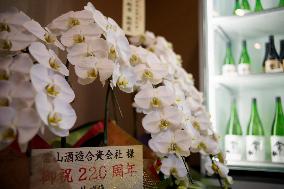
A flower basket marking the 220th anniversary of the establishment at Jozan Brewery in Fukui. Japanese alcoholic beverages, including sake (nihonshu), shochu and awamori, are made from grains and water. Craftspeople use koji mold to convert the starch in the ingredients into sugar, and oversee the process to make sure the mold grows in optimal conditions. Jozan, a brewery located in Fukui Prefecture, a region renowned for its high-quality rice, has upheld traditional sake-making for over 220 years. Led by Shinpei Tokoyama, the brewery exemplifies its ongoing efforts in coping with challenges in modern era while preserving traditional craftsmanship. With modern techniques, Jozan has realized a meticulous control over the brewing process, ensuring the consistency of product quality without compromising the essence of traditional making methods. In 2017, Jozan also renovated its brewing space, combining functionality with modern design to accommodate both production needs and visitors from around the world. The

  •  
Sake Making At Jozan Brewery In Fukui - Japan

Sake Making At Jozan Brewery In Fukui - Japan

Samples of fresh sake are pictured at Jozan Brewery in Fukui. Japanese alcoholic beverages, including sake (nihonshu), shochu and awamori, are made from grains and water. Craftspeople use koji mold to convert the starch in the ingredients into sugar, and oversee the process to make sure the mold grows in optimal conditions. Jozan, a brewery located in Fukui Prefecture, a region renowned for its high-quality rice, has upheld traditional sake-making for over 220 years. Led by Shinpei Tokoyama, the brewery exemplifies its ongoing efforts in coping with challenges in modern era while preserving traditional craftsmanship. With modern techniques, Jozan has realized a meticulous control over the brewing process, ensuring the consistency of product quality without compromising the essence of traditional making methods. In 2017, Jozan also renovated its brewing space, combining functionality with modern design to accommodate both production needs and visitors from around the world. The United Nations Educational, Scie

  •  
Sake Making At Jozan Brewery In Fukui - Japan

Sake Making At Jozan Brewery In Fukui - Japan

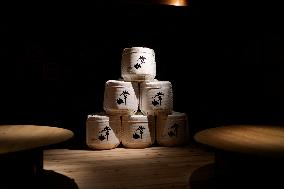
Trademarks of Jozan Brewery are pictured at the reception area of the brewery in Fukui. Japanese alcoholic beverages, including sake (nihonshu), shochu and awamori, are made from grains and water. Craftspeople use koji mold to convert the starch in the ingredients into sugar, and oversee the process to make sure the mold grows in optimal conditions. Jozan, a brewery located in Fukui Prefecture, a region renowned for its high-quality rice, has upheld traditional sake-making for over 220 years. Led by Shinpei Tokoyama, the brewery exemplifies its ongoing efforts in coping with challenges in modern era while preserving traditional craftsmanship. With modern techniques, Jozan has realized a meticulous control over the brewing process, ensuring the consistency of product quality without compromising the essence of traditional making methods. In 2017, Jozan also renovated its brewing space, combining functionality with modern design to accommodate both production needs and visitors from around the world. The United

  •  
Sake Making At Jozan Brewery In Fukui - Japan

Sake Making At Jozan Brewery In Fukui - Japan

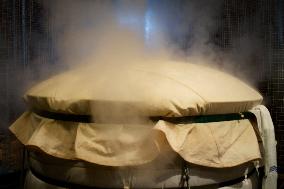
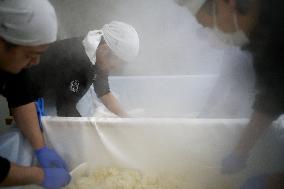
Cleaned rice is steamed at Jozan Brewery in Fukui. Japanese alcoholic beverages, including sake (nihonshu), shochu and awamori, are made from grains and water. Craftspeople use koji mold to convert the starch in the ingredients into sugar, and oversee the process to make sure the mold grows in optimal conditions. Jozan, a brewery located in Fukui Prefecture, a region renowned for its high-quality rice, has upheld traditional sake-making for over 220 years. Led by Shinpei Tokoyama, the brewery exemplifies its ongoing efforts in coping with challenges in modern era while preserving traditional craftsmanship. With modern techniques, Jozan has realized a meticulous control over the brewing process, ensuring the consistency of product quality without compromising the essence of traditional making methods. In 2017, Jozan also renovated its brewing space, combining functionality with modern design to accommodate both production needs and visitors from around the world. The United Nations Educational, Scientific and

  •  
Sake Making At Jozan Brewery In Fukui - Japan

Sake Making At Jozan Brewery In Fukui - Japan

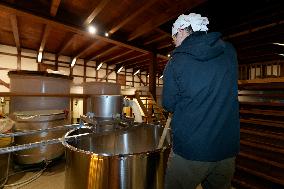
Shinpei Tokoyama waits for moromi to flow into the filter at Jozan Brewery in Fukui. Japanese alcoholic beverages, including sake (nihonshu), shochu and awamori, are made from grains and water. Craftspeople use koji mold to convert the starch in the ingredients into sugar, and oversee the process to make sure the mold grows in optimal conditions. Jozan, a brewery located in Fukui Prefecture, a region renowned for its high-quality rice, has upheld traditional sake-making for over 220 years. Led by Shinpei Tokoyama, the brewery exemplifies its ongoing efforts in coping with challenges in modern era while preserving traditional craftsmanship. With modern techniques, Jozan has realized a meticulous control over the brewing process, ensuring the consistency of product quality without compromising the essence of traditional making methods. In 2017, Jozan also renovated its brewing space, combining functionality with modern design to accommodate both production needs and visitors from around the world. The United Na

  •  
Sake Making At Jozan Brewery In Fukui - Japan

Sake Making At Jozan Brewery In Fukui - Japan

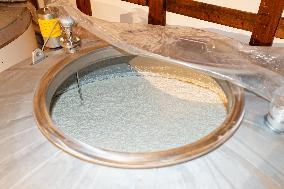
Fermenting moromi is pictured at Jozan Brewery in Fukui. Japanese alcoholic beverages, including sake (nihonshu), shochu and awamori, are made from grains and water. Craftspeople use koji mold to convert the starch in the ingredients into sugar, and oversee the process to make sure the mold grows in optimal conditions. Jozan, a brewery located in Fukui Prefecture, a region renowned for its high-quality rice, has upheld traditional sake-making for over 220 years. Led by Shinpei Tokoyama, the brewery exemplifies its ongoing efforts in coping with challenges in modern era while preserving traditional craftsmanship. With modern techniques, Jozan has realized a meticulous control over the brewing process, ensuring the consistency of product quality without compromising the essence of traditional making methods. In 2017, Jozan also renovated its brewing space, combining functionality with modern design to accommodate both production needs and visitors from around the world. The United Nations Educational, Scientifi

  •  
Sake Making At Jozan Brewery In Fukui - Japan

Sake Making At Jozan Brewery In Fukui - Japan

A worker seals a bottle of sake at Jozan Brewery in Fukui. Japanese alcoholic beverages, including sake (nihonshu), shochu and awamori, are made from grains and water. Craftspeople use koji mold to convert the starch in the ingredients into sugar, and oversee the process to make sure the mold grows in optimal conditions. Jozan, a brewery located in Fukui Prefecture, a region renowned for its high-quality rice, has upheld traditional sake-making for over 220 years. Led by Shinpei Tokoyama, the brewery exemplifies its ongoing efforts in coping with challenges in modern era while preserving traditional craftsmanship. With modern techniques, Jozan has realized a meticulous control over the brewing process, ensuring the consistency of product quality without compromising the essence of traditional making methods. In 2017, Jozan also renovated its brewing space, combining functionality with modern design to accommodate both production needs and visitors from around the world. The United Nations Educational, Scienti

  •  
Sake Making At Jozan Brewery In Fukui - Japan

Sake Making At Jozan Brewery In Fukui - Japan

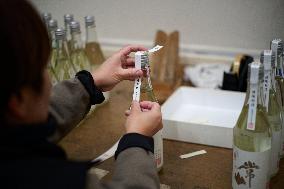
A worker examines samples of fresh sake at Jozan Brewery in Fukui. Japanese alcoholic beverages, including sake (nihonshu), shochu and awamori, are made from grains and water. Craftspeople use koji mold to convert the starch in the ingredients into sugar, and oversee the process to make sure the mold grows in optimal conditions. Jozan, a brewery located in Fukui Prefecture, a region renowned for its high-quality rice, has upheld traditional sake-making for over 220 years. Led by Shinpei Tokoyama, the brewery exemplifies its ongoing efforts in coping with challenges in modern era while preserving traditional craftsmanship. With modern techniques, Jozan has realized a meticulous control over the brewing process, ensuring the consistency of product quality without compromising the essence of traditional making methods. In 2017, Jozan also renovated its brewing space, combining functionality with modern design to accommodate both production needs and visitors from around the world. The United Nations Educational,

  •  
Sake Making At Jozan Brewery In Fukui - Japan

Sake Making At Jozan Brewery In Fukui - Japan

A worker stirs the mixture of steamed rice, koji, water and Shubo at Jozan Brewery in Fukui. Japanese alcoholic beverages, including sake (nihonshu), shochu and awamori, are made from grains and water. Craftspeople use koji mold to convert the starch in the ingredients into sugar, and oversee the process to make sure the mold grows in optimal conditions. Jozan, a brewery located in Fukui Prefecture, a region renowned for its high-quality rice, has upheld traditional sake-making for over 220 years. Led by Shinpei Tokoyama, the brewery exemplifies its ongoing efforts in coping with challenges in modern era while preserving traditional craftsmanship. With modern techniques, Jozan has realized a meticulous control over the brewing process, ensuring the consistency of product quality without compromising the essence of traditional making methods. In 2017, Jozan also renovated its brewing space, combining functionality with modern design to accommodate both production needs and visitors from around the world. The U

  •  
Sake Making At Jozan Brewery In Fukui - Japan

Sake Making At Jozan Brewery In Fukui - Japan

Bags of locally produced rice, a raw material for sake-making, is seen at Jozan Brewery in Fukui. Japanese alcoholic beverages, including sake (nihonshu), shochu and awamori, are made from grains and water. Craftspeople use koji mold to convert the starch in the ingredients into sugar, and oversee the process to make sure the mold grows in optimal conditions. Jozan, a brewery located in Fukui Prefecture, a region renowned for its high-quality rice, has upheld traditional sake-making for over 220 years. Led by Shinpei Tokoyama, the brewery exemplifies its ongoing efforts in coping with challenges in modern era while preserving traditional craftsmanship. With modern techniques, Jozan has realized a meticulous control over the brewing process, ensuring the consistency of product quality without compromising the essence of traditional making methods. In 2017, Jozan also renovated its brewing space, combining functionality with modern design to accommodate both production needs and visitors from around the world.

  •  
Sake Making At Jozan Brewery In Fukui - Japan

Sake Making At Jozan Brewery In Fukui - Japan

Workers weigh steamed rice at Jozan Brewery in Fukui. Japanese alcoholic beverages, including sake (nihonshu), shochu and awamori, are made from grains and water. Craftspeople use koji mold to convert the starch in the ingredients into sugar, and oversee the process to make sure the mold grows in optimal conditions. Jozan, a brewery located in Fukui Prefecture, a region renowned for its high-quality rice, has upheld traditional sake-making for over 220 years. Led by Shinpei Tokoyama, the brewery exemplifies its ongoing efforts in coping with challenges in modern era while preserving traditional craftsmanship. With modern techniques, Jozan has realized a meticulous control over the brewing process, ensuring the consistency of product quality without compromising the essence of traditional making methods. In 2017, Jozan also renovated its brewing space, combining functionality with modern design to accommodate both production needs and visitors from around the world. The United Nations Educational, Scientific a

  •  
Sake Making At Jozan Brewery In Fukui - Japan

Sake Making At Jozan Brewery In Fukui - Japan

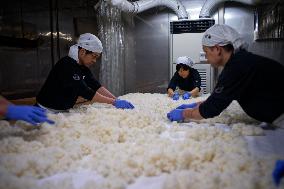
Shinpei Tokoyama (L) and workers spread steamed rice mixed with koji mold at Jozan Brewery in Fukui. Japanese alcoholic beverages, including sake (nihonshu), shochu and awamori, are made from grains and water. Craftspeople use koji mold to convert the starch in the ingredients into sugar, and oversee the process to make sure the mold grows in optimal conditions. Jozan, a brewery located in Fukui Prefecture, a region renowned for its high-quality rice, has upheld traditional sake-making for over 220 years. Led by Shinpei Tokoyama, the brewery exemplifies its ongoing efforts in coping with challenges in modern era while preserving traditional craftsmanship. With modern techniques, Jozan has realized a meticulous control over the brewing process, ensuring the consistency of product quality without compromising the essence of traditional making methods. In 2017, Jozan also renovated its brewing space, combining functionality with modern design to accommodate both production needs and visitors from around the worl

  •  
Sake Making At Jozan Brewery In Fukui - Japan

Sake Making At Jozan Brewery In Fukui - Japan

Shinpei Tokoyama (2nd L) and workers spread koji mold over steamed rice at Jozan Brewery in Fukui. Japanese alcoholic beverages, including sake (nihonshu), shochu and awamori, are made from grains and water. Craftspeople use koji mold to convert the starch in the ingredients into sugar, and oversee the process to make sure the mold grows in optimal conditions. Jozan, a brewery located in Fukui Prefecture, a region renowned for its high-quality rice, has upheld traditional sake-making for over 220 years. Led by Shinpei Tokoyama, the brewery exemplifies its ongoing efforts in coping with challenges in modern era while preserving traditional craftsmanship. With modern techniques, Jozan has realized a meticulous control over the brewing process, ensuring the consistency of product quality without compromising the essence of traditional making methods. In 2017, Jozan also renovated its brewing space, combining functionality with modern design to accommodate both production needs and visitors from around the world.

  •  
Shanyao Salt Field - China

Shanyao Salt Field - China

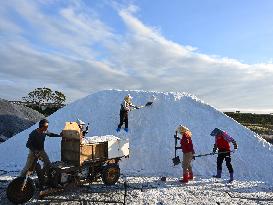
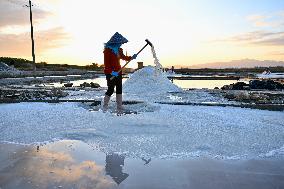
Workers unload crude salt and pile it up at Shanyao salt field in Quanzhou City, southeast China's Fujian Province, November 8, 2024. Covering an area of 920 hectares, the Shanyao salt field adheres to the traditional sun-drying techniques, and annually turns out 65,000 tonnes of sea salt. The Fujian traditional sun-drying techniques for sea salt production (Quanzhou style) was inscribed in the list of provincial intangible cultural heritage in 2022. Photo by Jiang Kehong/Xinhua/ABACAPRESS.COM

  •  
Shanyao Salt Field - China

Shanyao Salt Field - China

A worker operates at Shanyao salt field in Quanzhou City, southeast China's Fujian Province, November 8, 2024. Covering an area of 920 hectares, the Shanyao salt field adheres to the traditional sun-drying techniques, and annually turns out 65,000 tonnes of sea salt. The Fujian traditional sun-drying techniques for sea salt production (Quanzhou style) was inscribed in the list of provincial intangible cultural heritage in 2022. Photo by Jiang Kehong/Xinhua/ABACAPRESS.COM

  •  
Shanyao Salt Field - China

Shanyao Salt Field - China

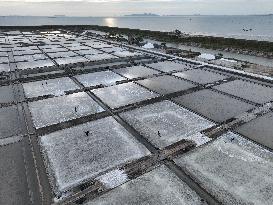
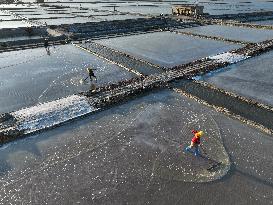
An aerial drone photo taken on November 9, 2024 shows a view of Shanyao salt field in Quanzhou City, southeast China's Fujian Province. Covering an area of 920 hectares, the Shanyao salt field adheres to the traditional sun-drying techniques, and annually turns out 65,000 tonnes of sea salt. The Fujian traditional sun-drying techniques for sea salt production (Quanzhou style) was inscribed in the list of provincial intangible cultural heritage in 2022. Photo by Jiang Kehong/Xinhua/ABACAPRESS.COM

  •  
Shanyao Salt Field - China

Shanyao Salt Field - China

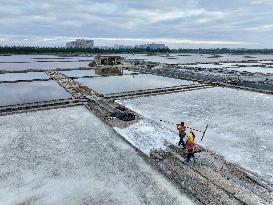
An aerial drone photo taken on November 9, 2024 shows two workers walking on a footpath at Shanyao salt field in Quanzhou City, southeast China's Fujian Province. Covering an area of 920 hectares, the Shanyao salt field adheres to the traditional sun-drying techniques, and annually turns out 65,000 tonnes of sea salt. The Fujian traditional sun-drying techniques for sea salt production (Quanzhou style) was inscribed in the list of provincial intangible cultural heritage in 2022. Photo by Jiang Kehong/Xinhua/ABACAPRESS.COM

  •  
Shanyao Salt Field - China

Shanyao Salt Field - China

A worker piles up crude salt at Shanyao salt field in Quanzhou City, southeast China's Fujian Province, November 8, 2024. Covering an area of 920 hectares, the Shanyao salt field adheres to the traditional sun-drying techniques, and annually turns out 65,000 tonnes of sea salt. The Fujian traditional sun-drying techniques for sea salt production (Quanzhou style) was inscribed in the list of provincial intangible cultural heritage in 2022. Photo by Jiang Kehong/Xinhua/ABACAPRESS.COM

  •  
Shanyao Salt Field - China

Shanyao Salt Field - China

An aerial drone photo taken on November 9, 2024 shows people agitating thickened seawater at Shanyao salt field in Quanzhou City, southeast China's Fujian Province. Covering an area of 920 hectares, the Shanyao salt field adheres to the traditional sun-drying techniques, and annually turns out 65,000 tonnes of sea salt. The Fujian traditional sun-drying techniques for sea salt production (Quanzhou style) was inscribed in the list of provincial intangible cultural heritage in 2022. Photo by Jiang Kehong/Xinhua/ABACAPRESS.COM

  •  
Shanyao Salt Field - China

Shanyao Salt Field - China

An aerial drone photo taken on November 8, 2024 shows people agitating thickened seawater at Shanyao salt field in Quanzhou City, southeast China's Fujian Province. Covering an area of 920 hectares, the Shanyao salt field adheres to the traditional sun-drying techniques, and annually turns out 65,000 tonnes of sea salt. The Fujian traditional sun-drying techniques for sea salt production (Quanzhou style) was inscribed in the list of provincial intangible cultural heritage in 2022. Photo by Jiang Kehong/Xinhua/ABACAPRESS.COM

  •  
Shanyao Salt Field - China

Shanyao Salt Field - China

A worker agitates thickened seawater at Shanyao salt field in Quanzhou City, southeast China's Fujian Province, November 9, 2024. Covering an area of 920 hectares, the Shanyao salt field adheres to the traditional sun-drying techniques, and annually turns out 65,000 tonnes of sea salt. The Fujian traditional sun-drying techniques for sea salt production (Quanzhou style) was inscribed in the list of provincial intangible cultural heritage in 2022. Photo by Jiang Kehong/Xinhua/ABACAPRESS.COM

  •  
Shanyao Salt Field - China

Shanyao Salt Field - China

A worker piles up crude salt at Shanyao salt field in Quanzhou City, southeast China's Fujian Province, November 8, 2024. Covering an area of 920 hectares, the Shanyao salt field adheres to the traditional sun-drying techniques, and annually turns out 65,000 tonnes of sea salt. The Fujian traditional sun-drying techniques for sea salt production (Quanzhou style) was inscribed in the list of provincial intangible cultural heritage in 2022. Photo by Jiang Kehong/Xinhua/ABACAPRESS.COM

  •  
Shanyao Salt Field - China

Shanyao Salt Field - China

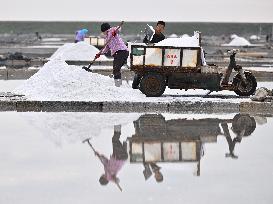
Workers transfer crude salt at Shanyao salt field in Quanzhou City, southeast China's Fujian Province, November 9, 2024. Covering an area of 920 hectares, the Shanyao salt field adheres to the traditional sun-drying techniques, and annually turns out 65,000 tonnes of sea salt. The Fujian traditional sun-drying techniques for sea salt production (Quanzhou style) was inscribed in the list of provincial intangible cultural heritage in 2022. Photo by Jiang Kehong/Xinhua/ABACAPRESS.COM

  •  
Shanyao Salt Field - China

Shanyao Salt Field - China

An aerial drone photo taken on November 8, 2024 shows people working at Shanyao salt field in Quanzhou City, southeast China's Fujian Province. Covering an area of 920 hectares, the Shanyao salt field adheres to the traditional sun-drying techniques, and annually turns out 65,000 tonnes of sea salt. The Fujian traditional sun-drying techniques for sea salt production (Quanzhou style) was inscribed in the list of provincial intangible cultural heritage in 2022. Photo by Jiang Kehong/Xinhua/ABACAPRESS.COM

  •  
Shanyao Salt Field - China

Shanyao Salt Field - China

A worker piles up crude salt at Shanyao salt field in Quanzhou City, southeast China's Fujian Province, November 8, 2024. Covering an area of 920 hectares, the Shanyao salt field adheres to the traditional sun-drying techniques, and annually turns out 65,000 tonnes of sea salt. The Fujian traditional sun-drying techniques for sea salt production (Quanzhou style) was inscribed in the list of provincial intangible cultural heritage in 2022. Photo by Jiang Kehong/Xinhua/ABACAPRESS.COM

  •  
Dege Sutra Printing House - Tibet

Dege Sutra Printing House - Tibet

This photo taken on Oct. 3, 2021 shows workers cleaning and maintaining woodcut printing blocks with traditional techniques at the Dege Sutra Printing House in Dege County of Garze Tibetan Autonomous Prefecture, southwest China's Sichuan Province. Built in 1729, the Dege Sutra Printing House preserves in good condition 325,520 woodcut printing plates containing significant Tibetan classics dating back to the 11th century. The majority of the blocks were carved between the 18th and mid-20th centuries. The printing blocks housed at the Dege Sutra Printing House in Sichuan were listed in this May as documentary heritage on the Asia Pacific regional register of UNESCO's Memory of the World (MOW) Programme. Photo by Shen Bohan/Xinhua/ABACAPRESS.COM

  •  
CHINA-TIANJIN-TIME-HONORED BRAND-VITALITY (CN)

CHINA-TIANJIN-TIME-HONORED BRAND-VITALITY (CN)

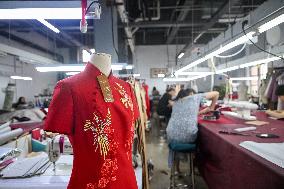
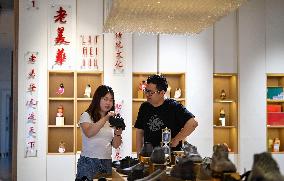
(240809) -- TIANJIN, Aug. 9, 2024 Photo by Xinhua/ABACAPRESS.COM) -- Customers select garments at the Laomeihua flagship store in north China's Tianjin Municipality, Aug. 7, 2024. Laomeihua, founded in 1911, is a century-old brand famous for its handmade shoes and clothes. The brand's products showcase the beauty of tradition, and its traditional shoe-making techniques have been acknowledged as China's national intangible cultural heritage in 2011. In recent years, Laomeihua has continued to meet the consumption needs of young generations, through the adjustments of offline store layout, the development and promotion of e-commerce platforms, and new designs and technologies. Currently, the brand launches over 1,200 new items annually, injecting new vitality into the time-honored brand. Photo by Xinhua/ABACAPRESS.COM/Zhao Zishuo)

  •  
CHINA-TIANJIN-TIME-HONORED BRAND-VITALITY (CN)

CHINA-TIANJIN-TIME-HONORED BRAND-VITALITY (CN)

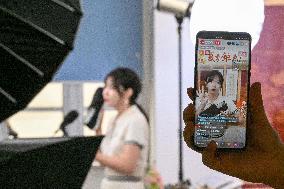
(240809) -- TIANJIN, Aug. 9, 2024 Photo by Xinhua/ABACAPRESS.COM) -- A livestreamer sells shoes of Laomeihua via livestreaming in north China's Tianjin Municipality, Aug. 7, 2024. Laomeihua, founded in 1911, is a century-old brand famous for its handmade shoes and clothes. The brand's products showcase the beauty of tradition, and its traditional shoe-making techniques have been acknowledged as China's national intangible cultural heritage in 2011. In recent years, Laomeihua has continued to meet the consumption needs of young generations, through the adjustments of offline store layout, the development and promotion of e-commerce platforms, and new designs and technologies. Currently, the brand launches over 1,200 new items annually, injecting new vitality into the time-honored brand. Photo by Xinhua/ABACAPRESS.COM/Sun Fanyue)

  •  
CHINA-TIANJIN-TIME-HONORED BRAND-VITALITY (CN)

CHINA-TIANJIN-TIME-HONORED BRAND-VITALITY (CN)

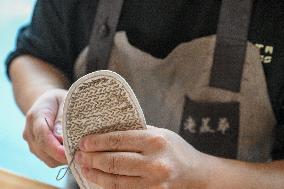
(240809) -- TIANJIN, Aug. 9, 2024 Photo by Xinhua/ABACAPRESS.COM) -- A staff member demonstrates the handmade process of a shoe sole at the launch ceremony of Laomeihua's new product "Pingbuqingyun" shoes in north China's Tianjin Municipality, Aug. 8, 2024. Laomeihua, founded in 1911, is a century-old brand famous for its handmade shoes and clothes. The brand's products showcase the beauty of tradition, and its traditional shoe-making techniques have been acknowledged as China's national intangible cultural heritage in 2011. In recent years, Laomeihua has continued to meet the consumption needs of young generations, through the adjustments of offline store layout, the development and promotion of e-commerce platforms, and new designs and technologies. Currently, the brand launches over 1,200 new items annually, injecting new vitality into the time-honored brand. Photo by Xinhua/ABACAPRESS.COM/Sun Fanyue)

  •  
CHINA-TIANJIN-TIME-HONORED BRAND-VITALITY (CN)

CHINA-TIANJIN-TIME-HONORED BRAND-VITALITY (CN)

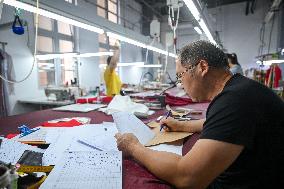
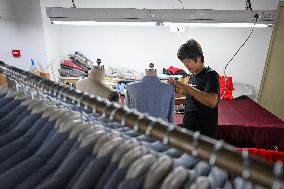
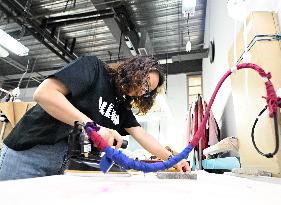
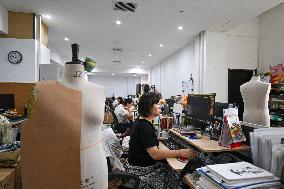
(240809) -- TIANJIN, Aug. 9, 2024 Photo by Xinhua/ABACAPRESS.COM) -- A tailor designs the sample garment in the workshop of Laomeihua in north China's Tianjin Municipality, July 15, 2024. Laomeihua, founded in 1911, is a century-old brand famous for its handmade shoes and clothes. The brand's products showcase the beauty of tradition, and its traditional shoe-making techniques have been acknowledged as China's national intangible cultural heritage in 2011. In recent years, Laomeihua has continued to meet the consumption needs of young generations, through the adjustments of offline store layout, the development and promotion of e-commerce platforms, and new designs and technologies. Currently, the brand launches over 1,200 new items annually, injecting new vitality into the time-honored brand. Photo by Xinhua/ABACAPRESS.COM/Sun Fanyue)

  •  
CHINA-TIANJIN-TIME-HONORED BRAND-VITALITY (CN)

CHINA-TIANJIN-TIME-HONORED BRAND-VITALITY (CN)

(240809) -- TIANJIN, Aug. 9, 2024 Photo by Xinhua/ABACAPRESS.COM) -- A customer selects garments at the Laomeihua flagship store in north China's Tianjin Municipality, Aug. 7, 2024. Laomeihua, founded in 1911, is a century-old brand famous for its handmade shoes and clothes. The brand's products showcase the beauty of tradition, and its traditional shoe-making techniques have been acknowledged as China's national intangible cultural heritage in 2011. In recent years, Laomeihua has continued to meet the consumption needs of young generations, through the adjustments of offline store layout, the development and promotion of e-commerce platforms, and new designs and technologies. Currently, the brand launches over 1,200 new items annually, injecting new vitality into the time-honored brand. Photo by Xinhua/ABACAPRESS.COM/Zhao Zishuo)

  •  
CHINA-TIANJIN-TIME-HONORED BRAND-VITALITY (CN)

CHINA-TIANJIN-TIME-HONORED BRAND-VITALITY (CN)

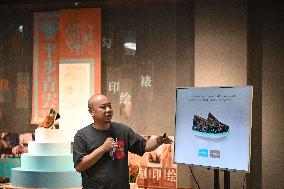
(240809) -- TIANJIN, Aug. 9, 2024 Photo by Xinhua/ABACAPRESS.COM) -- Jiang Nan, an innovation research and development director of Yangliuqing woodblock painting team, introduces the design ideas of "Pingbuqingyun" shoes, a collaborative product between Laomeihua and Yangliuqing, at the launch ceremony of the product in north China's Tianjin Municipality, Aug. 8, 2024. Laomeihua, founded in 1911, is a century-old brand famous for its handmade shoes and clothes. The brand's products showcase the beauty of tradition, and its traditional shoe-making techniques have been acknowledged as China's national intangible cultural heritage in 2011. In recent years, Laomeihua has continued to meet the consumption needs of young generations, through the adjustments of offline store layout, the development and promotion of e-commerce platforms, and new designs and technologies. Currently, the brand launches over 1,200 new items annually, injecting new vitality into the time-honored brand. Photo by Xinhua/ABACAPRESS.COM/Sun

  •  
CHINA-TIANJIN-TIME-HONORED BRAND-VITALITY (CN)

CHINA-TIANJIN-TIME-HONORED BRAND-VITALITY (CN)

(240809) -- TIANJIN, Aug. 9, 2024 Photo by Xinhua/ABACAPRESS.COM) -- A staff member makes customized embroidery designs based on customers' preferences at the Laomeihua flagship store in north China's Tianjin Municipality, July 15, 2024. Laomeihua, founded in 1911, is a century-old brand famous for its handmade shoes and clothes. The brand's products showcase the beauty of tradition, and its traditional shoe-making techniques have been acknowledged as China's national intangible cultural heritage in 2011. In recent years, Laomeihua has continued to meet the consumption needs of young generations, through the adjustments of offline store layout, the development and promotion of e-commerce platforms, and new designs and technologies. Currently, the brand launches over 1,200 new items annually, injecting new vitality into the time-honored brand. Photo by Xinhua/ABACAPRESS.COM/Sun Fanyue)

  •  
CHINA-TIANJIN-TIME-HONORED BRAND-VITALITY (CN)

CHINA-TIANJIN-TIME-HONORED BRAND-VITALITY (CN)

(240809) -- TIANJIN, Aug. 9, 2024 Photo by Xinhua/ABACAPRESS.COM) -- A staff member of Laomeihua makes garment designs in north China's Tianjin Municipality, Aug. 7, 2024. Laomeihua, founded in 1911, is a century-old brand famous for its handmade shoes and clothes. The brand's products showcase the beauty of tradition, and its traditional shoe-making techniques have been acknowledged as China's national intangible cultural heritage in 2011. In recent years, Laomeihua has continued to meet the consumption needs of young generations, through the adjustments of offline store layout, the development and promotion of e-commerce platforms, and new designs and technologies. Currently, the brand launches over 1,200 new items annually, injecting new vitality into the time-honored brand. Photo by Xinhua/ABACAPRESS.COM/Zhao Zishuo)

  •  
CHINA-TIANJIN-TIME-HONORED BRAND-VITALITY (CN)

CHINA-TIANJIN-TIME-HONORED BRAND-VITALITY (CN)

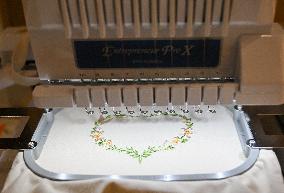
(240809) -- TIANJIN, Aug. 9, 2024 Photo by Xinhua/ABACAPRESS.COM) -- An embroidery machine stitches customized designs at the Laomeihua flagship store in north China's Tianjin Municipality, July 15, 2024. Laomeihua, founded in 1911, is a century-old brand famous for its handmade shoes and clothes. The brand's products showcase the beauty of tradition, and its traditional shoe-making techniques have been acknowledged as China's national intangible cultural heritage in 2011. In recent years, Laomeihua has continued to meet the consumption needs of young generations, through the adjustments of offline store layout, the development and promotion of e-commerce platforms, and new designs and technologies. Currently, the brand launches over 1,200 new items annually, injecting new vitality into the time-honored brand. Photo by Xinhua/ABACAPRESS.COM/Sun Fanyue)

  •  
CHINA-TIANJIN-TIME-HONORED BRAND-VITALITY (CN)

CHINA-TIANJIN-TIME-HONORED BRAND-VITALITY (CN)

(240809) -- TIANJIN, Aug. 9, 2024 Photo by Xinhua/ABACAPRESS.COM) -- A launch ceremony of "Pingbuqingyun" shoes, a collaborative product between Laomeihua and Yangliuqing woodblock painting team, is held in north China's Tianjin Municipality, Aug. 8, 2024. Laomeihua, founded in 1911, is a century-old brand famous for its handmade shoes and clothes. The brand's products showcase the beauty of tradition, and its traditional shoe-making techniques have been acknowledged as China's national intangible cultural heritage in 2011. In recent years, Laomeihua has continued to meet the consumption needs of young generations, through the adjustments of offline store layout, the development and promotion of e-commerce platforms, and new designs and technologies. Currently, the brand launches over 1,200 new items annually, injecting new vitality into the time-honored brand. Photo by Xinhua/ABACAPRESS.COM/Sun Fanyue)

  •  
CHINA-TIANJIN-TIME-HONORED BRAND-VITALITY (CN)

CHINA-TIANJIN-TIME-HONORED BRAND-VITALITY (CN)

(240809) -- TIANJIN, Aug. 9, 2024 Photo by Xinhua/ABACAPRESS.COM) -- Tailors work in the workshop of Laomeihua in north China's Tianjin Municipality, July 15, 2024. Laomeihua, founded in 1911, is a century-old brand famous for its handmade shoes and clothes. The brand's products showcase the beauty of tradition, and its traditional shoe-making techniques have been acknowledged as China's national intangible cultural heritage in 2011. In recent years, Laomeihua has continued to meet the consumption needs of young generations, through the adjustments of offline store layout, the development and promotion of e-commerce platforms, and new designs and technologies. Currently, the brand launches over 1,200 new items annually, injecting new vitality into the time-honored brand. Photo by Xinhua/ABACAPRESS.COM/Sun Fanyue)

  •  
CHINA-TIANJIN-TIME-HONORED BRAND-VITALITY (CN)

CHINA-TIANJIN-TIME-HONORED BRAND-VITALITY (CN)

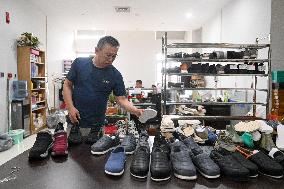
(240809) -- TIANJIN, Aug. 9, 2024 Photo by Xinhua/ABACAPRESS.COM) -- A shoemaker of Laomeihua selects shoe design samples in north China's Tianjin Municipality, July 15, 2024. Laomeihua, founded in 1911, is a century-old brand famous for its handmade shoes and clothes. The brand's products showcase the beauty of tradition, and its traditional shoe-making techniques have been acknowledged as China's national intangible cultural heritage in 2011. In recent years, Laomeihua has continued to meet the consumption needs of young generations, through the adjustments of offline store layout, the development and promotion of e-commerce platforms, and new designs and technologies. Currently, the brand launches over 1,200 new items annually, injecting new vitality into the time-honored brand. Photo by Xinhua/ABACAPRESS.COM/Sun Fanyue)

  •  
CHINA-TIANJIN-TIME-HONORED BRAND-VITALITY (CN)

CHINA-TIANJIN-TIME-HONORED BRAND-VITALITY (CN)

(240809) -- TIANJIN, Aug. 9, 2024 Photo by Xinhua/ABACAPRESS.COM) -- This photo shows a shoe design with a cloth cover made by Laomeihua in north China's Tianjin Municipality, Aug. 7, 2024. Laomeihua, founded in 1911, is a century-old brand famous for its handmade shoes and clothes. The brand's products showcase the beauty of tradition, and its traditional shoe-making techniques have been acknowledged as China's national intangible cultural heritage in 2011. In recent years, Laomeihua has continued to meet the consumption needs of young generations, through the adjustments of offline store layout, the development and promotion of e-commerce platforms, and new designs and technologies. Currently, the brand launches over 1,200 new items annually, injecting new vitality into the time-honored brand. Photo by Xinhua/ABACAPRESS.COM/Zhao Zishuo)

  •  
CHINA-TIANJIN-TIME-HONORED BRAND-VITALITY (CN)

CHINA-TIANJIN-TIME-HONORED BRAND-VITALITY (CN)

(240809) -- TIANJIN, Aug. 9, 2024 Photo by Xinhua/ABACAPRESS.COM) -- Customers select shoes at the Laomeihua flagship store in north China's Tianjin Municipality, Aug. 7, 2024. Laomeihua, founded in 1911, is a century-old brand famous for its handmade shoes and clothes. The brand's products showcase the beauty of tradition, and its traditional shoe-making techniques have been acknowledged as China's national intangible cultural heritage in 2011. In recent years, Laomeihua has continued to meet the consumption needs of young generations, through the adjustments of offline store layout, the development and promotion of e-commerce platforms, and new designs and technologies. Currently, the brand launches over 1,200 new items annually, injecting new vitality into the time-honored brand. Photo by Xinhua/ABACAPRESS.COM/Sun Fanyue)

  •  
CHINA-TIANJIN-TIME-HONORED BRAND-VITALITY (CN)

CHINA-TIANJIN-TIME-HONORED BRAND-VITALITY (CN)

(240809) -- TIANJIN, Aug. 9, 2024 Photo by Xinhua/ABACAPRESS.COM) -- A staff member irons garments in the workshop of Laomeihua in north China's Tianjin Municipality, Aug. 7, 2024. Laomeihua, founded in 1911, is a century-old brand famous for its handmade shoes and clothes. The brand's products showcase the beauty of tradition, and its traditional shoe-making techniques have been acknowledged as China's national intangible cultural heritage in 2011. In recent years, Laomeihua has continued to meet the consumption needs of young generations, through the adjustments of offline store layout, the development and promotion of e-commerce platforms, and new designs and technologies. Currently, the brand launches over 1,200 new items annually, injecting new vitality into the time-honored brand. Photo by Xinhua/ABACAPRESS.COM/Sun Fanyue)

  •  
CHINA-TIANJIN-TIME-HONORED BRAND-VITALITY (CN)

CHINA-TIANJIN-TIME-HONORED BRAND-VITALITY (CN)

(240809) -- TIANJIN, Aug. 9, 2024 Photo by Xinhua/ABACAPRESS.COM) -- A tailor irons fabric in the workshop of Laomeihua in north China's Tianjin Municipality, Aug. 7, 2024. Laomeihua, founded in 1911, is a century-old brand famous for its handmade shoes and clothes. The brand's products showcase the beauty of tradition, and its traditional shoe-making techniques have been acknowledged as China's national intangible cultural heritage in 2011. In recent years, Laomeihua has continued to meet the consumption needs of young generations, through the adjustments of offline store layout, the development and promotion of e-commerce platforms, and new designs and technologies. Currently, the brand launches over 1,200 new items annually, injecting new vitality into the time-honored brand. Photo by Xinhua/ABACAPRESS.COM/Zhao Zishuo)

  •  
CHINA-TIANJIN-TIME-HONORED BRAND-VITALITY (CN)

CHINA-TIANJIN-TIME-HONORED BRAND-VITALITY (CN)

(240809) -- TIANJIN, Aug. 9, 2024 Photo by Xinhua/ABACAPRESS.COM) -- Staff members of Laomeihua make new designs in north China's Tianjin Municipality, Aug. 7, 2024. Laomeihua, founded in 1911, is a century-old brand famous for its handmade shoes and clothes. The brand's products showcase the beauty of tradition, and its traditional shoe-making techniques have been acknowledged as China's national intangible cultural heritage in 2011. In recent years, Laomeihua has continued to meet the consumption needs of young generations, through the adjustments of offline store layout, the development and promotion of e-commerce platforms, and new designs and technologies. Currently, the brand launches over 1,200 new items annually, injecting new vitality into the time-honored brand. Photo by Xinhua/ABACAPRESS.COM/Sun Fanyue)

  •  
CHINA-TIANJIN-TIME-HONORED BRAND-VITALITY (CN)

CHINA-TIANJIN-TIME-HONORED BRAND-VITALITY (CN)

(240809) -- TIANJIN, Aug. 9, 2024 Photo by Xinhua/ABACAPRESS.COM) -- A sample garment machine prints based on the design drawings in the workshop of Laomeihua in north China's Tianjin Municipality, Aug. 7, 2024. Laomeihua, founded in 1911, is a century-old brand famous for its handmade shoes and clothes. The brand's products showcase the beauty of tradition, and its traditional shoe-making techniques have been acknowledged as China's national intangible cultural heritage in 2011. In recent years, Laomeihua has continued to meet the consumption needs of young generations, through the adjustments of offline store layout, the development and promotion of e-commerce platforms, and new designs and technologies. Currently, the brand launches over 1,200 new items annually, injecting new vitality into the time-honored brand. Photo by Xinhua/ABACAPRESS.COM/Sun Fanyue)

  •  
CHINA-BEIJING-CENTRAL AXIS-UNESCO WORLD HERITAGE-TIME-HONORED SHOE MAKER (CN)

CHINA-BEIJING-CENTRAL AXIS-UNESCO WORLD HERITAGE-TIME-HONORED SHOE MAKER (CN)

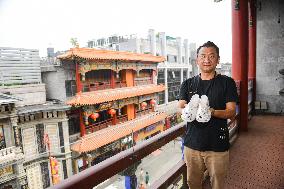
(240727) -- BEIJING, July 27, 2024 Photo by Xinhua/ABACAPRESS.COM) -- Cai Wenke explains as a visitor feels a hand-made cloth shoe to a student in Beijing, capital of China, July 21, 2024. Located at the south section of the Beijing Central Axis, Dashilan commercial area is home to many time-honored Chinese brands such as shoe maker Neiliansheng, silk and fabric store Ruifuxiang, foodstuff company Daoxiangcun and pharmaceutical company Tongrentang. Cai Wenke, an inheritor of making techniques of Neiliansheng handmade cloth shoes, is now exploring new possibilities of the products by combining the traditional designs with modern elements. He hopes that more people could wear the cloth shoes and walk on the Beijing Central Axis to experience the colorful Chinese culture. The United Nations Educational, Scientific and Cultural Organization (UNESCO) on Saturday announced the inclusion of the Beijing Central Axis: A Building Ensemble Exhibiting the Ideal Order of the Chinese Capital, into its world heritage list.

  •  
CHINA-BEIJING-CENTRAL AXIS-UNESCO WORLD HERITAGE-TIME-HONORED SHOE MAKER (CN)

CHINA-BEIJING-CENTRAL AXIS-UNESCO WORLD HERITAGE-TIME-HONORED SHOE MAKER (CN)

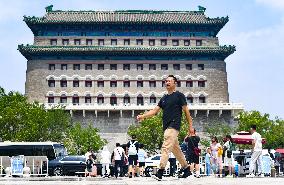
(240727) -- BEIJING, July 27, 2024 Photo by Xinhua/ABACAPRESS.COM) -- Cai Wenke walks in front of the Zhengyang Gate in Beijing, capital of China, July 21, 2024. Located at the south section of the Beijing Central Axis, Dashilan commercial area is home to many time-honored Chinese brands such as shoe maker Neiliansheng, silk and fabric store Ruifuxiang, foodstuff company Daoxiangcun and pharmaceutical company Tongrentang. Cai Wenke, an inheritor of making techniques of Neiliansheng handmade cloth shoes, is now exploring new possibilities of the products by combining the traditional designs with modern elements. He hopes that more people could wear the cloth shoes and walk on the Beijing Central Axis to experience the colorful Chinese culture. The United Nations Educational, Scientific and Cultural Organization (UNESCO) on Saturday announced the inclusion of the Beijing Central Axis: A Building Ensemble Exhibiting the Ideal Order of the Chinese Capital, into its world heritage list. Beijing Central Axis, initi

  •  
CHINA-BEIJING-CENTRAL AXIS-UNESCO WORLD HERITAGE-TIME-HONORED SHOE MAKER (CN)

CHINA-BEIJING-CENTRAL AXIS-UNESCO WORLD HERITAGE-TIME-HONORED SHOE MAKER (CN)

(240727) -- BEIJING, July 27, 2024 Photo by Xinhua/ABACAPRESS.COM) -- Cai Wenke makes cloth shoes in Beijing, capital of China, July 21, 2024. Located at the south section of the Beijing Central Axis, Dashilan commercial area is home to many time-honored Chinese brands such as shoe maker Neiliansheng, silk and fabric store Ruifuxiang, foodstuff company Daoxiangcun and pharmaceutical company Tongrentang. Cai Wenke, an inheritor of making techniques of Neiliansheng handmade cloth shoes, is now exploring new possibilities of the products by combining the traditional designs with modern elements. He hopes that more people could wear the cloth shoes and walk on the Beijing Central Axis to experience the colorful Chinese culture. The United Nations Educational, Scientific and Cultural Organization (UNESCO) on Saturday announced the inclusion of the Beijing Central Axis: A Building Ensemble Exhibiting the Ideal Order of the Chinese Capital, into its world heritage list. Beijing Central Axis, initially established in

  •  
CHINA-BEIJING-CENTRAL AXIS-UNESCO WORLD HERITAGE-TIME-HONORED SHOE MAKER (CN)

CHINA-BEIJING-CENTRAL AXIS-UNESCO WORLD HERITAGE-TIME-HONORED SHOE MAKER (CN)

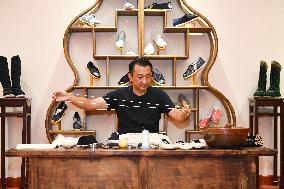
(240727) -- BEIJING, July 27, 2024 Photo by Xinhua/ABACAPRESS.COM) -- Cai Wenke shows hand-made cloth shoes in Beijing, capital of China, July 21, 2024. Located at the south section of the Beijing Central Axis, Dashilan commercial area is home to many time-honored Chinese brands such as shoe maker Neiliansheng, silk and fabric store Ruifuxiang, foodstuff company Daoxiangcun and pharmaceutical company Tongrentang. Cai Wenke, an inheritor of making techniques of Neiliansheng handmade cloth shoes, is now exploring new possibilities of the products by combining the traditional designs with modern elements. He hopes that more people could wear the cloth shoes and walk on the Beijing Central Axis to experience the colorful Chinese culture. The United Nations Educational, Scientific and Cultural Organization (UNESCO) on Saturday announced the inclusion of the Beijing Central Axis: A Building Ensemble Exhibiting the Ideal Order of the Chinese Capital, into its world heritage list. Beijing Central Axis, initially esta

  •  
Children Experience Traditional Rubbing Techniques - China

Children Experience Traditional Rubbing Techniques - China

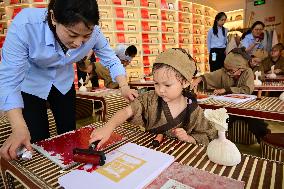
A staff member helps a girl on her rubbing work at an art space themed on Chinese culture in Qingdao, east China's Shandong Province, July 19, 2024. The art space held experience activities on traditional rubbing techniques for children during the summer vacation. Photo by Li Ziheng/ABACAPRESS.COM

  •  
Children Experience Traditional Rubbing Techniques - China

Children Experience Traditional Rubbing Techniques - China

Children try rubbing at an art space themed on Chinese culture in Qingdao, east China's Shandong Province, July 19, 2024. The art space held experience activities on traditional rubbing techniques for children during the summer vacation. Photo by Li Ziheng/ABACAPRESS.COM

  • Main
  • Top
  • Editorial
  • Creative
  • About Us
  • About ILG
  • Terms of use
  • Company
  • BEHIND
  • Price List
  • Single Plan
  • Monthly Plan
  • Services
  • Shooting
  • Rights Clearance
  • Support
  • FAQ
  • How To Buy
  • Contact Us
  • Become a Partner

© KYODO NEWS IMAGES INC

All Rights Reserved.

  • Editorial
  • Olympics
  • News
  • Sports
  • Japan
  • Tech
  • Royal
  • Disaster
  • NorthKorea
  • Old Japan
  • SNS
  • Creative
  • Food
  • Japan
  • Landscape
  • Animal
  • Popular
  • #Ukraine
  • #Russia
  • #coronavirus
  • #N. Korea
  • #China
  • #Thailand
  • #Ukraine
  • #Russia
  • #coronavirus
  • #N. Korea
  • #China
  • #Thailand
  • Food
  • Japan
  • Landscape
  • Animal
  • Olympics
  • News
  • Sports
  • Japan
  • Tech
  • Royal
  • Disaster
  • NorthKorea
  • Old Japan
  • SNS